
These creamy fried sandwiches are an easy vintage recipe sourced from the 12-18th October 1985 issue of the British magazine Cooks Weekly. You will only need a few everyday ingredients, such as your choice of bread, cream cheese or soft cheese spread, eggs, and mustard (optional, can be replaced with a different seasoning such as dried herbs), and some vegetable oil for frying. This is a quick recipe that is ideal for a snack or a light meal with a salad, or for dinner along with a nice bowl of soup.

The texture and flavour of these old-fashioned creamy fried sandwiches are similar to a savoury French toast. The filling is deliciously creamy while the outer layer is lightly crisp. This recipe is easily adapted by using a flavoured cream cheese such as garlic, chilli, or herb. Additionally, you can add in thin slices of tomato, cooked diced bacon or ham, or a spoonful of sautéed onions, bell peppers, or mushrooms.
Make it vegan or plant-based
For vegan fried sandwiches, use a dairy-free cream cheese, and for extra flavour a slice of vegan ham would be lovely. To replace the egg, you can use aquafaber, which is the drained liquid from a can of chickpeas (garbanzo beans) mixed with a little dairy-free milk.
Make it gluten-free
For gluten-free fried sandwiches, choose a gluten-free bread.
A collaborative cooking project
This recipe is part of my new, exciting collaborative cooking project, testing old British recipes with my lovely blog visitors. I tend to think of this blog as a shared space rather than just a place for visitors, and I would really love it if you would think of this blog as containing our virtual recipe box of interesting, fun historical recipes. All these recipes belong to all of us as they are part of British history.
For this project, I’m sharing untested historic recipes from my personal collection sourced from old recipe card sets and vintage magazines, vintage cookery books, out-of-print cookery books, leaflets and booklets, retro newspaper cuttings, recipes from 1940s kitchen front, handwritten family recipes, and more.
By untested, I mean that I have not yet tested the recipe in my own kitchen, but with the aim of doing so. However, as this is a collaboration, I am inviting you to join in and help test the recipes, as this will help bring them back to life in our modern kitchens.
If you’d like to take part, simply have a go at the recipe and see how it turns out for you. You can then share your experience in the comments. You can follow the recipe as it’s written or make a few adjustments that suit your taste and preferences better. Tell us if the recipe turned out differently than expected and of course how it tasted.
If you take any photos, you’re very welcome to send them to the blog email. With your permission, I will include your results within this post, along with any tips or notes that may help other recipe testers. You’re also welcome to contribute anonymously if you prefer, just let me know.
You can contact me via email at – Leigh@oldbritishrecipes.com
You can find more information regarding the project over on our Untested Historic Recipes Collaboration page.
For more historic sandwich, fried bread and on-toast recipes, do have a look around our collection of old British sandwiches, fried bread & on-toast recipes collection. More recipes are added frequently.
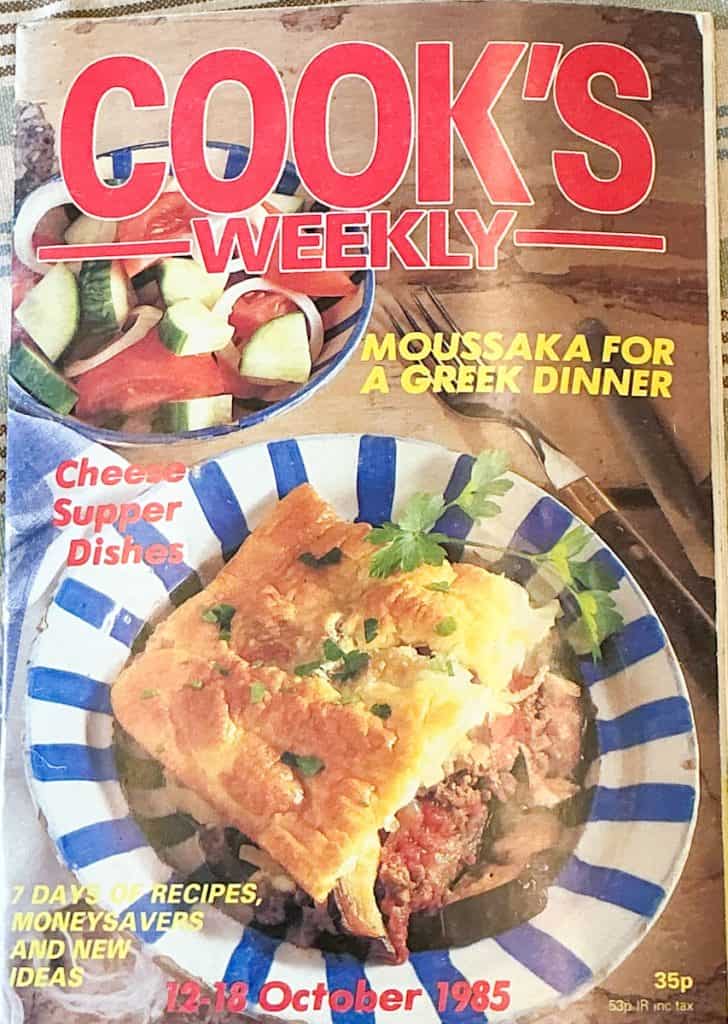
Origin of creamy fried sandwich recipe
This recipe comes from a 1985 12-18 October issue of Cooks Weekly, a magazine printed in Great Britain by Marshall Cavendish Ltd.
About this recipe
This recipe comes from a 1985 issue of Cooks Weekly, a time when quick, practical meals using simple ingredients were popular in many households. The magazine contained recipe suggestions for each day of the week, along with microwave recipes and recipes for prepping and storing in the freezer.
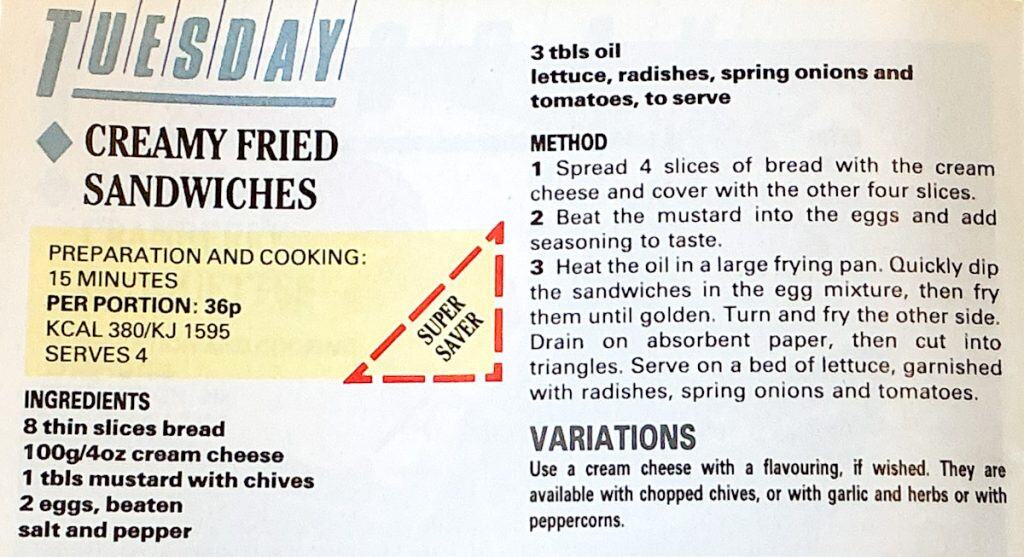
The Creamy fried sandwich recipe was recommended as a Tuesday recipe, which points to it being a mid-week light meal. Additionally, the recipe is marked as a ‘Super Saver‘, indicating it as a budget-friendly option. The recipe stated that each fried sandwich costs 36p! Obviously, the cost per portion would have now increased!
This type of recipe was designed to be quick to prepare, economical and easy to adapt.
The original recipe provided the following variation options: instead of plain cream cheese, a flavoured one can be used, such as cream cheese with chives, garlic, herbs, or peppercorns.
The method used to prepare this fried sandwich is very similar to preparing French toast, but instead of slices of bread, a sandwich is prepared before being dipped in egg and fried.
The original recipe
Below is an image of the original recipe as it appeared in the magazine:
Before you begin
As this is an untested recipe, results may vary depending on the ingredients and method you use. Old recipes were often written quite briefly, so where appropriate, I’ve rewritten the method and added additional advice or tips so as to make it easier to follow in our modern kitchens. However, I aim to keep the recipe as close to the original as possible.
Serving suggestion: This Plain Victorian Salad recipe would go very nicely with these fried sandwiches.
If you enjoyed this recipe, you may also like to prepare another eggy bread recipe – these Victorian Bread Steaks, which are surprisingly delicious and very frugal!
Creamy Fried Sandwiches
Equipment
- frying pan
- mixing bowl
- mixing spoon
- butter knife
- cutlery fork or small balloon whisk
- kitchen paper
Ingredients
- 8 slices of bread [oridinary shop-bought sliced bread thickness]
- 100 grams cream cheese [4 oz]
- 1 tablespoon mustard [original recipe calls for mustard with chives, but any prepared mustard is fine. This ingredient can be replaced with mixed dried herbs and a tablespoon of milk if preferred]
- 2 eggs, beaten [medium or large]
- 3 tablespoons vegetable oil
To serve [optional]
- mixed salad [original recipe suggests lettuce, radishes, spring onions, and tomatoes]
Instructions
- Take 4 slices of the bread and spread the cream cheese equally between the slices. Top the slices with the remaining 4 slices of bread.8 slices of bread, 100 grams cream cheese
- Add the eggs and mustard to a mixing bowl and whisk with a fork. Add some salt and pepper to season.1 tablespoon mustard, 2 eggs, beaten
- Add the oil to the frying pan and heat over a medium-high heat.3 tablespoons vegetable oil
- Briefly dip a sandwich into the egg mixture and fry each side until nicely golden. Depending on the size of your frying pan, you may be able to fry several sandwiches at one time.
- Once each sandwich is done, place it on top of some kitchen paper to absorb any excess oil.
- Slice each fried sandwich into 2 triangles or rectangles.
- Optional: Serve with salad.mixed salad
Tips:
- You may find that you need extra beaten eggs if your bread absorbs a lot of the egg as it's dipped. Prepare more egg mixture as required.You may find that you need to use more oil towards the end of cooking the sandwiches if the oil has been absorbed by the subsequent sandwiches.
Notes
- These creamy fried sandwiches are best enjoyed freshly cooked, while the outside is crisp and the filling is warm and soft.
- However, they can be eaten at room temperature, but I do recommend eating them soon after cooking.
- If you do have leftovers, they can be stored in the refrigerator, covered or within a container.
- Reheat gently by frying in a pan to help restore some of the crispness. Avoid microwaving as this can affect the texture.
- The amount of egg mixture may need to be increased depending on the type of bread used, as some types of bread may absorb more of the egg. If so, prepare a little extra egg.
- Variations:
- Use flavoured cream cheese such as garlic, herb, chilli, pepper, tomato, chive, etc.
- Add thin slices of tomato, cooked bell pepper, mushrooms, onions, or bacon/ham.
- Swap the mustard for dried herb mix and a tablespoon of milk.
- Replace the cream cheese with a cheese spread or cheddar cheese.
- Use any type of thin-sliced bread.
- Dietary adaptations:
- This recipe is already suitable for vegetarians.
- For a vegan/plant-based/dairy-free/egg-free version, use a dairy-free cream cheese and replace the egg with aquafaba, which is the drained liquid from a can of chickpeas. Mix the aquafabar with some dairy-free milk.
- For a gluten-free version, use a gluten-free sliced bread.
Have you tried this recipe?
I’d really love to hear your experience if you give this recipe a go. Did it work as written? Did you make any changes? Would you make it again? Please share your thoughts in the comments, as your feedback could really help others. You can also send us an email via this email – Leigh@oldbritishrecipes.com
It also helps me to share recipes that you will love. If you take a photo, you’re very welcome to send it in.
If you enjoy exploring old British traditional recipes, you can find many more in our collection of historic recipes, which you can find links for along the side of the homepage.
Just for fun: Readers’ Corner
Just for fun and interest, I’ve included an image, below, of the Readers’ Corner segment of the Cooks Weekly magazine. The issue is the same as the fried sandwiches. I find it fascinating to read about how ordinary people used to cook, eat, and manage their households and families, especially how they stretched their budgets and what shops they visited, etc. I hope you enjoy reading this as much as I did.
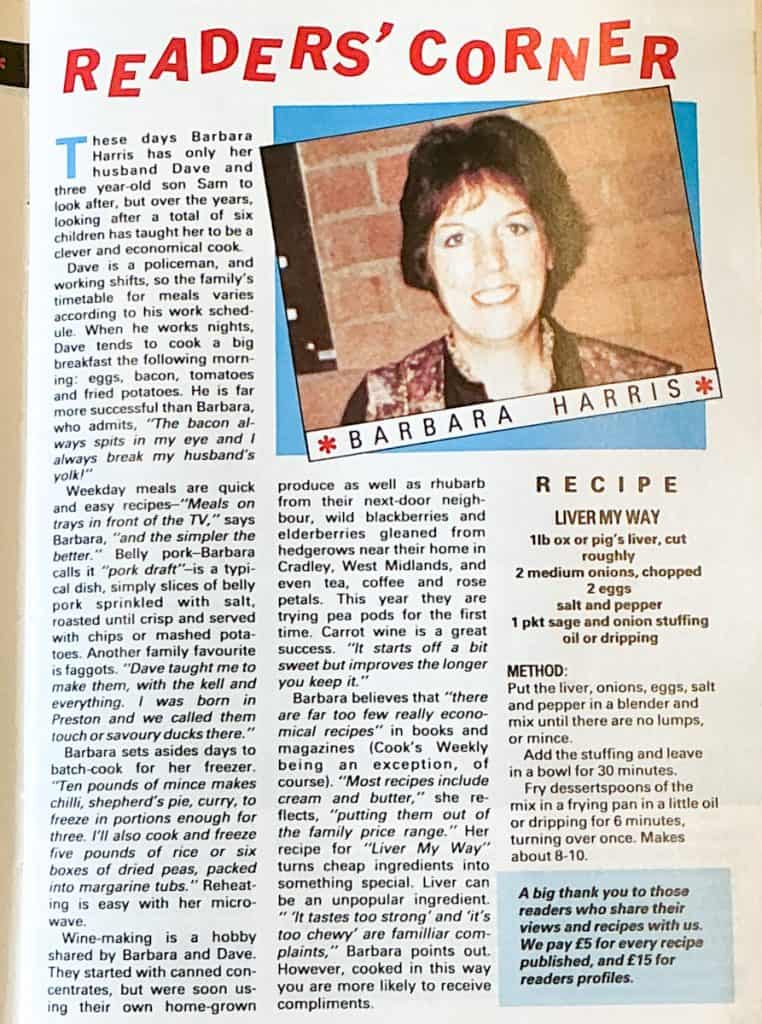
The image above features questions from readers about cooking and kitchen problems, with answers from Marguerite Patten from the 1980s magazine. Many of the topics, such as saving money and making the most of ingredients, are still relevant today.
Vintage kitchen tips
The following image is a photo from the same Cooks Weekly magazine as the fried sandwiches. I have included it for interest and fun, as it makes good reading. Some of the readers’ questions that Marguerite Patten answers are still relevant to today’s home cooks, so hopefully they will help you today.
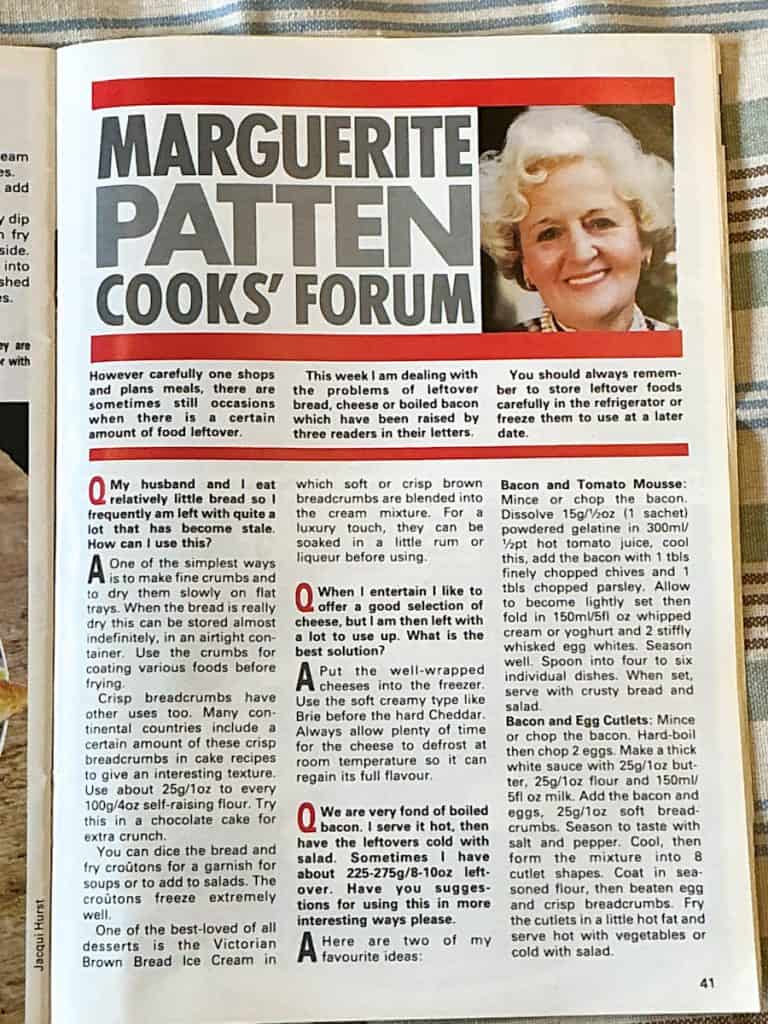
For anyone using a screen reader or who prefers text, the image above includes letters from readers discussing everyday cooking, budgeting, and shopping habits in the 1980s. It gives an interesting glimpse into how households managed food and expenses at the time.